Two Inches From Glory: A Claw Machine, a Stuffed Penguin and the Art of Almost
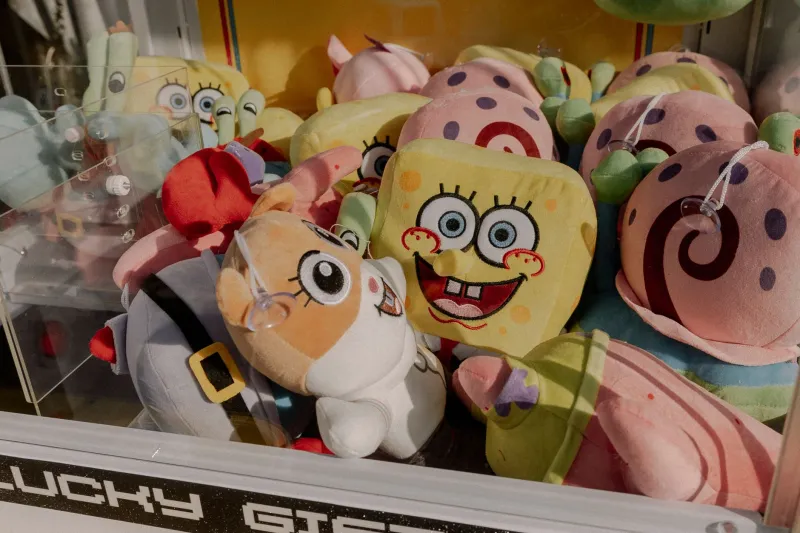
The rain was doing that thing where it doesn't fall so much as hang about in the air, waiting to see if you've brought a coat. I had. It was the wrong coat. The arcade, when I ducked into it, smelled of hot dust, vinegar and the faint electrical warmth of too many cabinets breathing at once. Most of the machines were dark. A penny fall shuffled to itself in the corner. And there, under its own little spotlight, sat the claw machine.
I had ten pounds in my pocket and no particular plan. That is, I should say, how most of my best afternoons begin. Within four minutes I had decided I was going to win a stuffed penguin. Within six, I had remembered that the claw machine is not a game of skill. It is a tiny theatre with a coin slot.
The Cabinet as Stage
You forget how much of the seaside arcade is performance. The lights are too bright, the carpet is too loud, and every machine is arranged like a stage set: the prizes at the back, the glass polished to a slightly deceptive shine, the claw hanging above it all like a judgment. In November, with the promenade empty and the gulls looking personally offended by the weather, the effect is even stranger. You are the entire audience.
The ritual is always the same. You circle the cabinet. You check the prize positions. You decide that the penguin near the chute is definitely doable, even though it has clearly been placed there by someone who knows exactly what hope looks like. You feed in a pound coin. The machine wakes up with a little musical chirp that sounds like it was recorded in 1993 and never updated. The joystick feels loose in a way that suggests it has opinions of its own.
And then the drop. The claw descends, opens, closes, lifts. For half a second the penguin rises. For half a second you are a person who wins things. Then the claw gives a little shudder, the penguin slips, and it falls back into the pile with a soft, insulting plop. The machine makes a noise that is almost apologetic. Almost.
The Attendant Knows
The attendant appeared at my elbow somewhere around the fourth attempt. He had the look of a man who has seen every version of this afternoon before. I asked him, casually, whether the penguin was maybe a bit stuck.
He gave me the sort of look that is not unkind but is entirely beyond surprise. 'It's a game of inches,' he said. 'And the house owns the inches.'
He explained, without me really asking, that the claw tension is set by the timer. The machine is not broken. It is doing exactly what it was built to do. The near-misses are not accidents. They are the product. He topped up the prizes with the efficiency of someone restocking a shelf, gave the glass a wipe, and wandered off to check the change machine. I stood there with my remaining coins and felt, oddly, like I'd been let in on a secret that everyone already knew.
The thing is, I didn't stop. I want to be clear about that. I had been told, in plain English, that the machine was rigged. And I put another pound in anyway.
The Mathematics of Almost
The maths of the claw machine is not complicated. A go costs a pound, maybe two. The prize is a stuffed penguin worth perhaps three quid if you bought it online, less if you bought it in bulk. The probability of winning on any single attempt is low enough that the arcade is still in business. The expected value is terrible. You do not need a spreadsheet to work this out. You need only look at the prize pile and the size of the chute and the way the claw dangles like a tired hand.
But the maths of almost is different. The near-miss is a powerful thing. The penguin moves. The claw closes. It lifts. It drops. You were two inches away. Two inches. And because you were two inches away, your brain files the attempt not as a failure but as evidence that success is imminent. It is the same logic that keeps people feeding the penny fall, or buying scratchcards, or believing that this is the year the football team finally gets its act together.
The arcade knows this. The arcade has always known this. The claw machine is not a scam, exactly. It is a very honest kind of entertainment. It tells you what it is. It just does so in a language of flashing lights and soft plops that is easier to ignore than a sign saying 'you will probably lose'.
Why We Feed It Anyway
I think about British leisure a lot. Not in a heavy way. Just in the way you notice things when you're standing in an arcade in November with rain on the glass and a stuffed penguin refusing to fall. We have a long relationship with small, slightly ridiculous pleasures. The 2p machine. The pub quiz. The seaside donkey. The raffle at the school fete. None of it is efficient. All of it is a bit silly. And yet we keep doing it, because the alternative is sitting at home calculating the precise return on our attention.
In 2026, so much of life is optimised. Your phone knows what you want before you do. Your streaming service has an algorithm for your taste. Even the walk to the shop is tracked by something. The claw machine is not optimised. It is not personalised. It does not care about your watch history. It just takes your coin, gives you a little show, and then drops the penguin. There is something almost restful about that. It is rigged, but it is rigged in a straightforward way. It doesn't pretend to be your friend.
And when you do win, the win is real. I know because eventually I did win. Not the penguin. A smaller, stranger prize: a keyring shaped like a fish. It cost me ten pounds, all told. The attendant gave me a nod as I retrieved it from the chute. Not a triumphant nod. More of a 'there you go' nod. I put the fish keyring in my pocket and walked back out into the rain.
The Price of a Small Win
Ten pounds for a fish keyring is objectively a bad deal. I could have bought a better fish keyring for two quid and had change for a cup of tea. But that is not what I was paying for. I was paying for the half-second lift. The little chirp. The feeling of being two inches from glory and then, briefly, three. I was paying for the story, which I have now told you, and which I will probably tell again.
The stuffed penguin stayed where it was, nose pressed to the glass, waiting for the next person with a pound coin and a November afternoon to spare. I hope someone wins it. I hope they feel ridiculous and pleased. I hope they name it something even more ridiculous. The claw machine will take their money, and it will give them a show, and the house will own the inches. That's the deal. We keep feeding it anyway. That's the theatre.