The Song Between the Traffic and the Weather
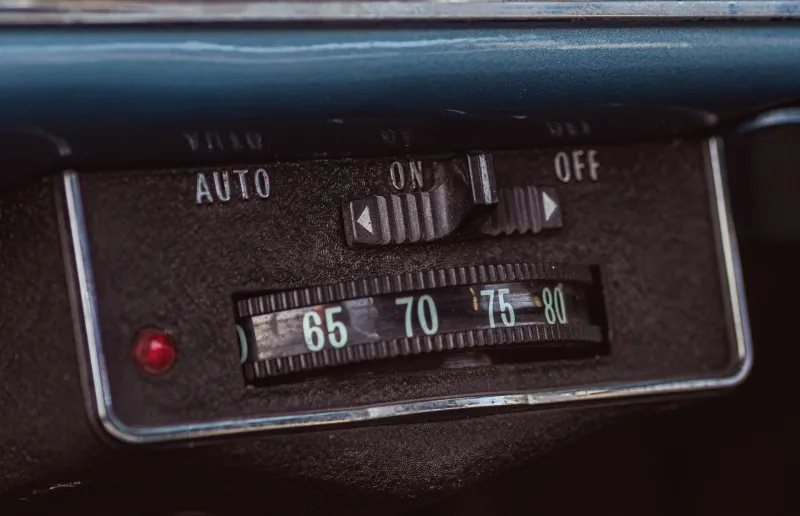
The dashboard hour
I was stuck behind a bin lorry on a wet Tuesday morning when I heard it: a man called Dave, dedicating 'The Power of Love' to his wife, Sandra, because she'd put up with him for thirty years and he'd forgotten to book a restaurant. The presenter read it out without a trace of irony, then went straight into the travel news. Somewhere between the A-road closure and the chance of drizzle, a small act of public tenderness had taken place.
This was local radio in 2026. Not a podcast, not a playlist, not a voice note. A request line. A real person, or at least a real-sounding person, reading a message from another real person, and then playing a song that probably wasn't cool in 1994 and certainly isn't cool now. It shouldn't work. It does.
A social network with no profile picture
The dedication slot is a strange little institution. It survives on FM and DAB, tucked between the traffic and the weather, often on a station that plays the same forty songs in a slightly different order each day. You don't need an account. You don't need a username. You don't need to disclose your mother's maiden name or agree to cookies. You just need to ring a number, or send an email, and hope the producer likes the cut of your jib.
And what gets read out is remarkably honest. Birthdays, mostly. Anniversaries. 'Get well soon' messages. Apologies — some vague, some painfully specific. Unexplained shout-outs to people called Shaz or Big Kev. A request for 'anything by Queen' because someone's dad used to sing it badly in the car. There's no algorithm deciding what's important. There's a human being with a running order and a stack of messages, trying to fit a stranger's moment into a three-minute gap before the news.
Compare that to the social networks we carry in our pockets. Those are built to harvest attention, not to deliver it. They want you to perform, to quantify, to compare. The request line wants you to say something nice about your mate and then get on with your day. It is, in its own small way, a better model for how to be online: low stakes, no metrics, no replies section full of people arguing about nothing.
The apology slot
My favourite dedications are the apologies. There's a whole subgenre of them: the vague 'sorry for Saturday' ones, the 'I was out of order and I know it' ones, the ones that name no crime at all and leave you imagining something either very minor or very serious. A stranger has decided that the best way to say sorry is to ask a radio station to play 'Sorry Seems to Be the Hardest Word' at eleven forty-five on a weekday morning. It is absurd. It is also weirdly brave.
The presenter never asks for details. They just read it, maybe add a gentle 'hope you two sort it out', and press play. There's no comment thread. No one is quote-tweeting the apology. The person who needs to hear it either hears it or doesn't. That's it.
What the request line knows
The request line knows something the feed doesn't: that most of us are not particularly interesting, but we are particular. We have specific songs attached to specific people. We have anniversaries that matter only to us. We have a mate who once did us a favour and we never quite said thank you properly. The dedication slot is a place for those small, unmonetisable truths. It doesn't ask you to be your best self. It asks you to be a person with a memory and a phone.
It also knows that localness matters. A national station can read out a dedication, but it can't say 'for everyone stuck on the ring road' with the same authority. Local radio still has a map in its head — the retail park, the hospital, the school that's always on the news for its car park. When a presenter says 'this one's for the staff on the night shift at the retail park', you believe them. That's not a demographic. That's a place.
The silence when it goes
I don't want to be sentimental about this. Local radio is a business, and businesses close. Presenters get laid off. Request lines get automated or quietly dropped. One day the dedication slot might just be a pre-recorded segment with a generic voice and a form to fill in online. It will probably still exist, in the way that a museum exhibit exists. But it will have lost the thing that makes it matter: the sense that someone is actually listening, and that a stranger is willing to say your name on the air.
When that happens, we'll lose a small, imperfect, deeply human social network. Not a big one. Not a profitable one. Just a place where a man called Dave can say sorry to Sandra, and the rest of us can listen in the rain, and feel briefly like we're all in the same town.
Press play
So here's my modest proposal for 2026: next time you're in the car and the travel news finishes, don't switch over. Wait for the dedication. You might get a birthday. You might get an apology. You might get a shout-out to Big Kev. But you'll get something you won't find in a feed: a small, unpolished, unsponsored moment of being a person among people. That's worth the licence fee, or at least the price of a coffee. And if you've got a dedication in you, ring it in. The line's still open. For now.