Two Discs for a Pound: What the Charity-Shop DVD Rack Taught Me About Film
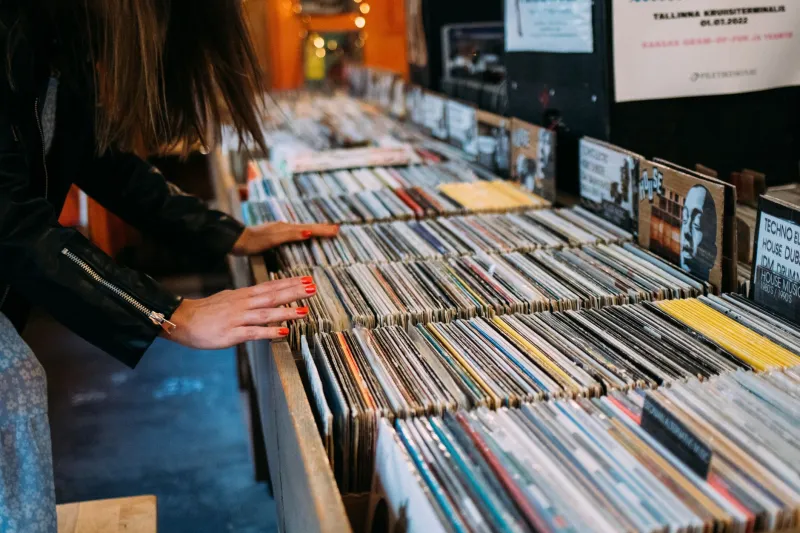
There is a particular smell to a charity-shop DVD shelf. Dust, slightly warm plastic, and the ghost of somebody else's living room. The prices are written in marker on little paper slips, the spines are sun-bleached to a uniform pale blue, and the whole thing is usually wedged between a tower of jigsaws and a shelf of Lee Child. I have spent an unreasonable amount of my adult life in front of these shelves, and I've come to believe they are the best film school in Britain.
Not the most prestigious. Not the most comfortable. The best.
Nobody curated this, and that's the whole curriculum
A streaming service is a thesis. Somebody in a glass building decided what you are likely to want, then built a row of thumbnails to prove it. The charity-shop shelf is the opposite: it is the sediment of a thousand house clearances, loft conversions and 'we're redecorating' afternoons. It has no argument to make. It is simply what people in one postcode stopped wanting, arranged by whoever was on the rota that Tuesday.
Which means you can stand there and find a 1990s French drama about a woman who inherits a vineyard, a region 2 disc of a war film your dad likes, series three of something you've never heard of, and a documentary about penguins. All for the price of a coffee. None of it recommended by an algorithm. All of it chosen by you, badly, on the spot, with no reviews consulted.
That last part matters. Choosing a film you would never have clicked on is a skill, and it's one the shelf forces you to practise.
The etiquette of the shelf
There are rules, mostly unwritten, and I'll write them down anyway.
Don't stand square in front of it. These aisles are narrow enough that a folded umbrella is an obstacle. Read the spines at an angle and let people through.
Don't reorganise it. I know. I know the alphabet has been abandoned and it's upsetting. The shelf's chaos is the point, and the volunteers do not need your help curating their shop.
Always open the case. A missing disc is the oldest trick on the shelf. So is the wrong film in the right case, which is less of a problem and more of a bonus. Check the disc for scratches while you're there, and hold it to the light like a suspicious coin.
Ask about the box behind the counter. There is always a box behind the counter, unsorted, and the volunteers are usually delighted that someone finally asked.
Don't haggle. It's a pound, and it's going to the hospice.
Buy the weird one. If you're hovering, that's the signal. Hovering is the shelf's way of telling you something.
The double bill you'd never have programmed
The real education starts when you get home. Two films that have no business sharing an evening, watched back to back, will teach you more about how films are built than any curated season. A gorgeous, slow, black-and-white picture followed by a straight-to-video action film is not a mistake; it's a seminar on pacing, budget and the different jobs a camera can do.
You cannot do this on a streamer. The recommendations keep pulling you back towards the middle, towards what you already like, towards a version of taste that never gets tested. The shelf drops you somewhere strange and leaves you there.
Box sets as time capsules
My favourite thing on any shelf is a donated box set. The complete run of something, all six series, cellophane long gone but the discs barely touched. Somebody's Christmas present. Somebody's January of good intentions. Somebody's lockdown project that lasted two episodes.
Look inside. There's often a receipt used as a bookmark, a train ticket from a decade ago, or a biro note on the inner sleeve reading something like 'SERIES 2 MISSING – ASK DAD'. You are not just buying a box set; you are buying the last ten years of a stranger's shelving decisions.
And here's the bit people forget: the extras. A pound gets you the film, the deleted scenes, the commentary track, and forty minutes of a director explaining, with some irritation, why a scene doesn't work. That is a film school module. That is someone standing at the front of a room telling you how the trick is done. Try finding that between the thumbnails.
How to make it a proper side quest
Give yourself a set of rules, because arbitrary rules are what turn a browse into a project.
- You have four pounds. That's it. Choose accordingly.
- No looking anything up until the credits roll. Not the rating, not the plot, not whether it's meant to be good.
- You finish it. Grainy transfer, dodgy dubbing, all of it. You bought it, you owe it an hour and a half.
- Write one line about it afterwards. In a notebook, in a note on your phone, in a message to a friend who will not reply. One line is enough.
That's the quest: attention, paid deliberately, on something nobody recommended. It is a small bet on your own taste, and sometimes you lose, and the losing is useful.
Why the shelf still matters in 2026
Walk down most high streets now and the charity shops are among the few units that aren't a vape shop, a barber or boarded up. Many have quietly stopped taking DVDs because of the storage, and I understand it, I do. But the shelf persists, stubbornly, in the back of shops that have been there for thirty years.
There's something appealing about a film collection that can't be taken away from you. Nothing on that shelf disappears because a licensing deal expired on a Thursday. Nothing gets 'leaving soon'. You pay a pound, you own it, you can lend it to someone and forget to ask for it back, which is the traditional British distribution model.
Go in with a fiver. Come out with four films, a jigsaw you don't need, and the vague feeling of having been to the pictures. That's not nostalgia talking. It's just a genuinely good way to spend a Saturday, and it's still on offer if you know where to look.