A Ten-Pence Time Machine in the Corner of the Chippy
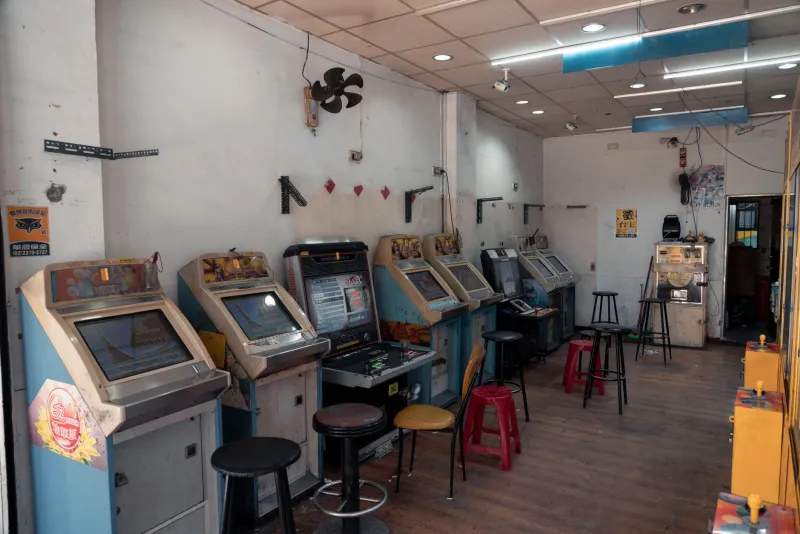
On a wet Saturday in 2026, the most interesting museum in Britain might be sitting behind a chip shop, lit by a strip light that hums like a tired wasp. You go in for salt and vinegar. You stay because there is a Street Fighter II cabinet in the corner with a joystick that has been repaired with electrical tape and hope. A kid is feeding it 10ps. An adult is watching, trying to remember which button throws a fireball. Nobody is treating this as heritage. It is just the back room. And that is exactly why it matters.
The back room with the buzzy lighting
The chip-shop arcade is not a curated experience. There is no gift shop, no audio guide, no laminated timeline explaining the cultural significance of the coin pusher. There is a carpet that has seen things. There is a fruit machine that pays out in tokens you can only spend on more fruit machine. There is a claw machine holding plush toys that look like they have been through a minor legal dispute. The whole place smells faintly of batter and warm electricity.
That lack of polish is the point. These machines are not displayed behind glass because they are still being used. They are not preserved by a trust or funded by a grant. They survive because a landlord cannot be bothered to move them, because a generation of kids still likes the noise, because the owner knows that a ten-pence go on a racing game keeps a family in the shop for another twenty minutes. It is accidental preservation, held together by stubbornness and spare change.
What a 2p pusher actually preserves
People mock the 2p pusher. I understand why. It is a machine that turns gravity and hope into a slow, clattering disappointment. But look at what it actually does. It gathers people around a single piece of furniture. It gives strangers a shared language of nudges, sighs and small victories. It teaches patience. It also teaches a very British relationship with money: the belief that a small amount of copper can be managed into something slightly better if you just push it at the right angle.
In a country where so much leisure has been flattened into subscriptions and screens, the 2p pusher is a relic of physical cause and effect. You push. Something moves. Something falls. The reward is not a high score or an achievement trophy. It is a handful of coins that were probably yours to begin with. That is not efficient. It is not meant to be.
Tape, stubbornness and the honest joystick
A home console in 2026 can render a city block in real time and connect you to someone in another time zone before you have taken your coat off. It is astonishing. It is also sealed, glossy and designed to be replaced. The arcade cabinet in the chippy is none of those things. Its screen may be scratched. Its marquee may be faded. Its buttons may have the specific mushiness of a machine that has been leaned on by ten thousand impatient hands.
But that is why a 10p joystick can feel more honest than a home console. You can feel the machine working. You can hear the coin drop. You can see the wear on the control panel where generations of players have planted their palms. The cabinet does not try to hide its age. It wears it like a badge. When it breaks, someone fixes it badly and it keeps going. That is not just entertainment. It is a small act of defiance against the idea that everything must be new.
The seaside arcade as accidental heritage
Head to Blackpool, Cleethorpes, Skegness, Southend or Brighton and you will find the bigger version of the same story. The seaside arcade is a strange mix of carnival noise, coastal damp and family ritual. It is where grandparents hold bags while teenagers try to win a giant monkey. It is where the weather is always about to turn. It is where a machine can cost 20p and still feel like an event.
These places are not museums in any official sense. But they do the work of museums. They keep alive the memory of what British leisure used to feel like before everything was booked online. They preserve the sound of coins falling into a metal tray. They preserve the idea that a day out can be a series of small, cheap thrills rather than one expensive, scheduled experience. They preserve the pleasure of doing something slightly pointless in public.
What we lose when the machine goes
When an arcade cabinet is finally removed, it rarely makes the news. It is not listed. It is not photographed. It is simply unplugged and replaced by a table, a storage box or nothing at all. The loss is quiet, which is why it is easy to miss. But each removal takes away a tiny bit of shared space. A place where you could stand next to a stranger and both be bad at the same game. A place where the only thing you needed to join in was a coin.
We are good at preserving grand things in this country. We are less good at preserving the ordinary places where people actually spent their Saturdays. The chip-shop arcade is not grand. It is not beautiful. It is not even particularly clean. But it is a living archive of British play, and it is still open for business.
A small plea for the last ten-pence coin
So next time you are waiting for a bag of chips, look in the corner. If there is a machine with a dusty screen and a joystick that feels slightly loose, put in a coin. You will probably lose. That is not the point. The point is to keep the machine switched on, to keep the carpet sticky, to keep the back room humming. Britain's accidental museums of play do not need a grant. They need someone to press start.