The Two-Pound Weather Forecast: Four Weeks in the Corner Shop Queue
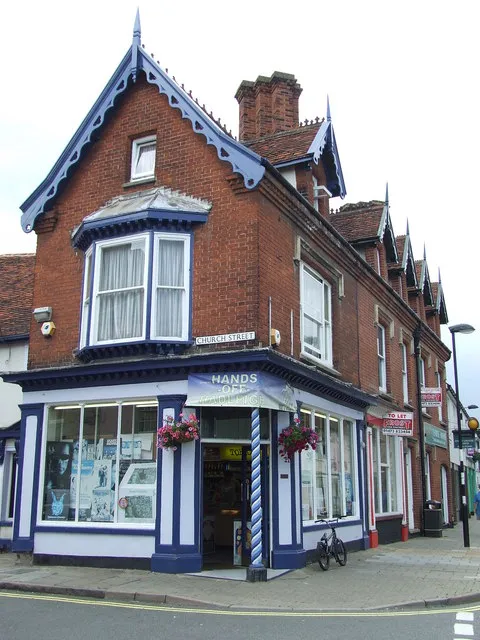
Photo: Keith Evans, CC BY-SA 2.0, via Wikimedia Commons
The corner shop near me has a strip light that buzzes like a wasp trapped in a jar. It has a fridge that hums, a rack of birthday cards nobody has rotated since the summer, and a counter that does a brisk trade in small, folded optimism. For four weeks I went in most evenings, bought something I didn’t need, and stood in the queue. Not to play. To watch.
What I found was not a story about gambling, exactly. It was a story about weather. Not the kind that gets a symbol on the forecast, but the personal kind — the two-pound weather system people carry into a shop at ten past six and unfold on the counter alongside their milk.
The Counter After Six
The evening queue has its own rhythm. It is not the frantic lunchtime dash for meal deals and crisps. It is slower. People come in with coats still done up, hands carrying the day. A man in a hi-vis jacket puts a pint of milk down and then, almost as an afterthought, asks for a scratchcard. A woman with a reusable bag buys a birthday card and two lottery slips. A teenager buys a can of energy drink and a packet of chewing gum and watches the scratchcard display like it is a museum exhibit he has heard about but never visited.
The shop itself is not glamorous. The lino has a worn path from the door to the counter, like a footpath across a field. There is a hand-written sign about the card machine that has been there so long it has become part of the decor. The scratchcards live behind the till in a plastic display, all gold and neon and promises. In 2026, when the news is full of energy bills and interest rates and the cost of a weekly shop, that display looks less like a game and more like a small, permitted rebellion.
A Ritual With Loose Change
What struck me first was how ritualised it all is. Nobody just buys a scratchcard. They ask for a specific one. They hold it up to the light. They scratch it with a coin, carefully, like they are defusing something. Some people do it at the counter, under the buzz of the strip light, and some take it away to do in the car or at the kitchen table. Either way, there is a pause. A small, deliberate pause in the day.
You can tell the regulars. They don’t need to ask what’s available. They know the names, the colours, the odds in the way other people know bus timetables. They talk about them the way you might talk about the weather: ‘Any luck?’ ‘Not today.’ ‘Maybe tomorrow.’ It is a conversation with a script so well-worn that it has become comfortable. Nobody is pretending they are about to win the EuroMillions. They are buying a few minutes of possibility.
That distinction matters. The two-pound dream is not really a financial plan. It is a mood. It is the same impulse that makes someone buy a posh coffee on a Tuesday or a lottery ticket when the jackpot rolls over. It is a small, affordable way of saying: not today, maybe, but not never.
The Confessional Effect
The longer I stood in that queue, the more the counter felt like a kind of confessional. Not in a religious sense — nobody was unburdening themselves about anything serious — but in the way people talk while they wait. The shopkeeper knows who is having a hard week. He knows who buys the cheapest bread and who has started buying the slightly better one again. He knows who plays the same numbers every week and who picks a different scratchcard each time because ‘you never know.’
There is a gentleness to it. The queue does not judge. It is a place where you can be a bit hopeful without having to explain yourself. You can spend two pounds on a piece of card and nobody will ask why. In a year when so much of life feels like it is being audited, that is not nothing.
I spoke to one woman who has been buying a scratchcard every Friday for years. She told me she doesn’t expect to win. ‘It’s the bit before,’ she said. ‘It’s the walk home. You’ve got it in your pocket and you haven’t scratched it yet. That’s the good bit.’ I have thought about that a lot. The good bit is not the winning. The good bit is the not-yet-knowing.
Hope, Priced at £2
There is a temptation to be cynical about all this. To see scratchcards as a tax on hope, a way of selling a dream to people who can least afford it. That critique is not wrong. But it is also not the whole room. Standing in that queue, I saw something more complicated: a small, stubborn refusal to let the day be entirely about what it costs.
In 2026, the cost-of-living conversation has become background noise. We all know the numbers. We all know the feeling of a receipt that seems to have grown a tail. The corner shop is one of the last places where you can still buy something for two pounds and get a story out of it. Not a good story, necessarily. But a story. A small, scratched-off maybe.
And the shop counter is where that story gets told. It is where the daily weather gets checked. Not the weather outside, but the weather inside. The little barometer of how people are doing, what they are hoping for, what they are willing to spend on a moment of not-yet-knowing.
What the Lino Knows
After four weeks, I stopped buying things I didn’t need and just stood in the queue for ten minutes. The shopkeeper raised an eyebrow but said nothing. The strip light buzzed. The fridge hummed. A man in a cap bought a lottery slip and a packet of custard creams. A woman bought a scratchcard and a birthday card for someone she clearly didn’t like very much. The door opened and closed, opened and closed.
I don’t think I learned anything that will change my life. But I learned something about the shape of hope in 2026. It is small. It fits in a pocket. It costs two pounds. And it lives on a counter, under a buzzing light, in the queue between the milk and the door.