The Mug Is the Memory: Why Souvenirs Deserve Their Dust
At the back of my kitchen cupboard, behind the tin of tomatoes nobody trusts, there is a mug from a rainy week in Whitby. It has a picture of a seagull on it and the word 'Squawk' in a font that was probably chosen by a committee. It is a terrible mug. The handle is too small. The glaze has a chip. I have never used it for tea. And I would not throw it out for anything.
That mug is not really a mug. It is a receipt. It proves I went somewhere. It proves I stood in a gift shop and thought, yes, this is the object that will capture the experience. It does not capture the experience, of course. But it does something stranger and more useful. It keeps a small door open in my head. When I see it, I do not remember the rain. I remember the chip shop we found by accident, the arcade with the broken claw machine, the feeling of being somewhere that was not home.
The cupboard of small, pointless evidence
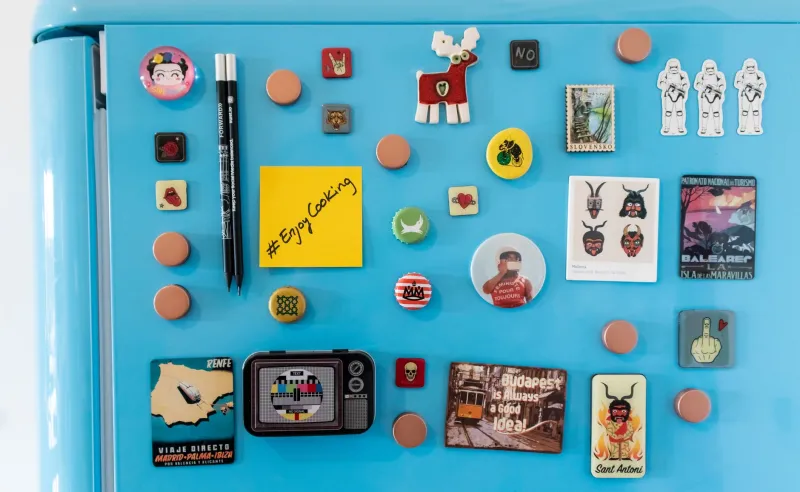
Most of us have one. The top shelf. The back of the drawer. The box that moves house with you but never gets unpacked. It is full of things that do nothing. A fridge magnet from a cathedral city I could not name if you paid me. A snow globe with a bubble in it. A pencil sharpener shaped like a lighthouse. A keyring from an airport. A postcard I meant to send and never did.
Decluttering culture has a blind spot here. It looks at these objects and sees only the practical question: do you use this? The answer is no. It does not spark joy in the tidy, colour-coded sense. It does not have a home. It is not helping. So out it goes. But the question is wrong. A souvenir is not supposed to be useful. It is supposed to be a prompt. It is a small, physical reminder that you are a person who has been places and done things, even if those places were slightly damp and those things were mostly eating chips.
A mug is a filing system
I have come to think of souvenirs as a filing system for memory. The important stuff is already stored away: the photos, the messages, the stories you tell at parties. But the mug is a different kind of file. It is not the headline. It is the footnote. It holds the texture of a trip. The colour of a shopfront. The smell of a seaside town in October. The specific boredom of waiting for a train while holding a bag of rock.
That is why throwing out a souvenir can feel oddly painful. You are not just losing an object. You are losing a handle on a memory. You are deciding that the trip is no longer worth the shelf space. And maybe that is fine for some things. But the mug from Whitby is not taking up much room. It is earning its place by doing nothing at all.
The pencil sharpener problem
Let us be honest about the pencil sharpener. It is a bad object. It has never sharpened a pencil in my house. It sits in a drawer, shaped like a lighthouse, and every time I open the drawer it rolls into the cutlery. It is, by any reasonable measure, tat. But it is also evidence of a specific afternoon. I bought it because I was on a creative side quest of my own: a day out with no plan, a camera, and a willingness to buy something stupid. The sharpener is the proof that I did that. It is a trophy for being a slightly ridiculous person in public.
That is what decluttering misses. It treats objects as either useful or burdensome. It does not leave room for objects that are neither. Objects that are simply reminders. Objects that say: you were here, you were happy enough to buy a lighthouse pencil sharpener, and that counts for something.
What we are really keeping
When we keep a souvenir, we are not really keeping the object. We are keeping a version of ourselves. The version who went to the seaside and bought a mug. The version who thought a fridge magnet was a good idea. The version who had enough spare time and spare change to be a bit silly. That version can get lost in the admin of adult life. The mug is a small marker in the cupboard that says: remember her. Remember him. Remember that.
There is also something quietly British about this. We are not a nation that likes to make a fuss about our memories. We do not tend to build shrines to our holidays. We buy a mug. We put it in the cupboard. We let it gather dust. It is a very understated kind of archive. But it is an archive all the same.
A modest archive on the top shelf
So I am not going to declutter the mug. I am not going to thank it and let it go. I am going to leave it where it is, behind the tomatoes, doing its useless, important job. It will never hold tea. It will never match anything. It will never be worth anything. But it will remind me that I once went somewhere, and that I was the kind of person who wanted to bring a bit of it home.
That is not clutter. That is a small, dusty museum of a life. And every now and then, it is worth opening the cupboard and paying the entrance fee.