A Fiver, a Pint, and Someone's First Joke
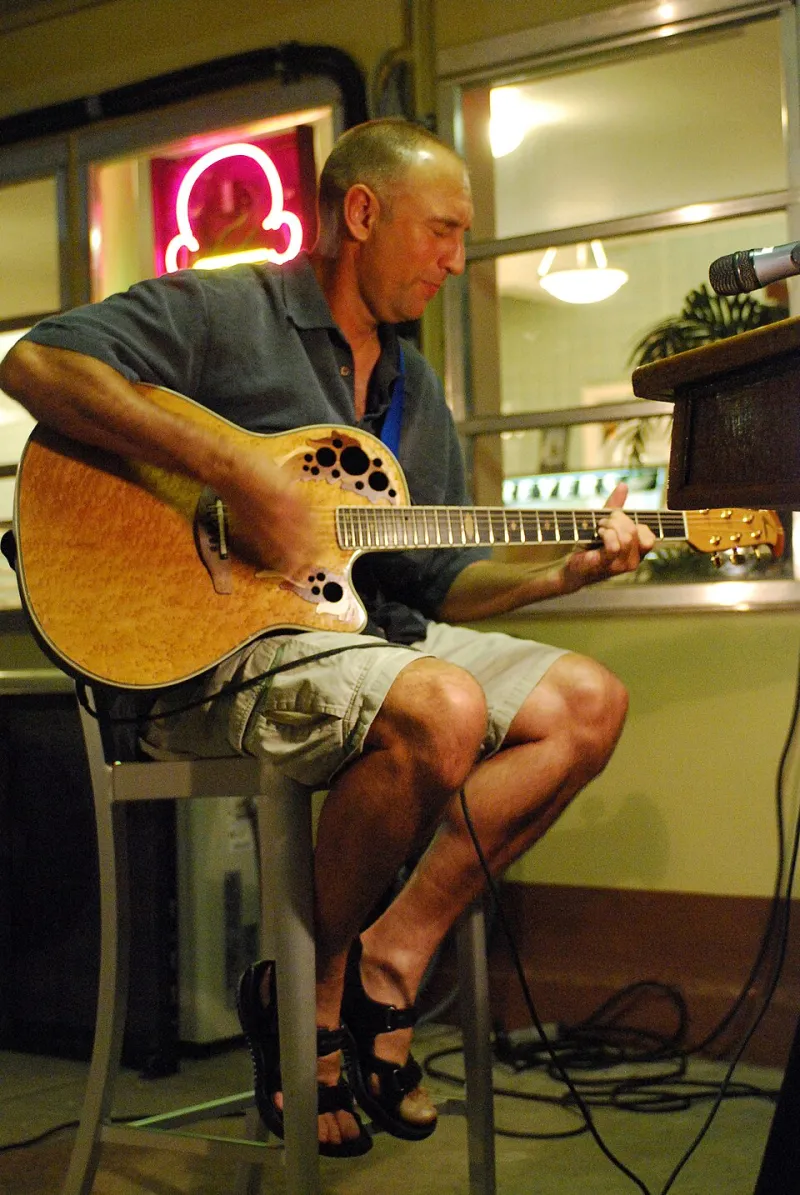
Photo: Petty Officer 2nd Class Cheryl Dilgard, Public domain, via Wikimedia Commons
On a Thursday in October 2026, I paid five pounds to sit in a pub back room and watch eleven people try to be funny. One of them was excellent. Three were fine. Two were visibly terrified. One read a poem about a bus that somehow got the biggest laugh of the night. I had a pint, a packet of salt and vinegar crisps, and a better time than I've had at most big-ticket comedy shows in the last few years.
This is not a nostalgia piece. Open mic nights are not better because they are amateur. They are better because they are live, cheap, and unpolished in a way that makes the room feel like it belongs to the people in it. In 2026, when a comedy special can be filmed in a stadium and edited into a perfectly timed hour, there is something almost radical about a gig where the host has to shout over the fruit machine.
The economics of a back-room night out
Let's do the maths. A ticket for a touring comedian at a big venue can easily be forty or fifty quid before fees. Add a train, a drink, and a bag of chips on the way home, and you are looking at a hundred-pound night out. An open mic in a pub is usually free or a fiver. A pint is a pint. You can walk there. You can leave after an hour if it's not working. You can stay until the end and still have money for the bus.
That matters. Not everyone can justify a hundred pounds for a laugh, and not every laugh needs to be delivered by someone with a Netflix logo in the corner. The low price changes the mood. You are not a customer being upsold a merchandise bundle. You are a punter in a room, and the performers are not that different from you. Some of them have come straight from work. One of them is a teacher. One of them is a delivery driver who has been carrying a notebook around for six months. The stakes are low, and that is exactly why it works.
Awkwardness is part of the ticket
The awkward bits are not a bug. They are the texture of the night. The host with a clipboard doing a raffle for a bar tab. The comedian who loses the thread of a story and has to ask the room where he was. The two friends at the back who laugh too loudly because they are nervous for someone. The silence after a joke that does not land is not comfortable, but it is honest. You can feel the room decide whether to rescue the performer or let them sweat. Usually it rescues them.
Polished specials edit that out. They give you the best version of an hour, with the pauses tightened and the crowd warmed. That is fine for a Sunday night on the sofa. But it is not the same as being in a room when someone tries a new line for the first time and it dies, then tries another and it flies. You are watching the creative process in public, and it is messy and human and occasionally brilliant.
Why polished specials can wait
I am not saying streaming comedy is bad. Some of it is excellent. But there is a sameness to the big specials now: the same arena backdrop, the same crowd work, the same 'I don't know what's going on in the world but...' opener. The open mic is the opposite of that. It is unpredictable by design. You might get a stand-up doing five minutes of new material, a poet who has never performed before, a musical act that is really a man with a ukulele and a grudge. You might get all three in one night.
The other thing is the cost of trying. A big tour is a product. An open mic is a side quest. You are not there to consume the best possible version of comedy; you are there to see what happens when people have a go. That is closer to the spirit of why anyone makes anything in the first place.
The creative side quest principle
This is the same reason I like charity shop DVDs and sketchbooks full of bad drawings. Low stakes make room for experiment. If you only ever do the thing you are already good at, you stop finding new things. Open mic nights are a whole room full of people ignoring that rule. Some of them will be brilliant. Most will be fine. A few will be terrible in a way you will talk about for weeks. All of them are doing something braver than scrolling.
If you have never been to one, here is the drill: find a pub with a back room, check the listings, turn up early enough to get a seat, buy a drink, and clap for everyone. Do not film the whole thing on your phone. Do not give unsolicited notes to the acts. Do not sit at the front and fold your arms like a judge on a talent show. Just be a good room. The performers will do the rest.
A better kind of night out
I left the pub at half ten, walked home in the cold, and realised I had spent less than a tenner on the whole evening, including the crisps. I had also seen a woman do a joke about her nan's air fryer that I have repeated three times since. That is not a polished hour. It is a small, live, shared thing that only happened because a bunch of people turned up and had a go. In 2026, that feels like a bargain.