The Paper Trail of a Friday Night: What Forty Crumpled Menus Say About My High Street
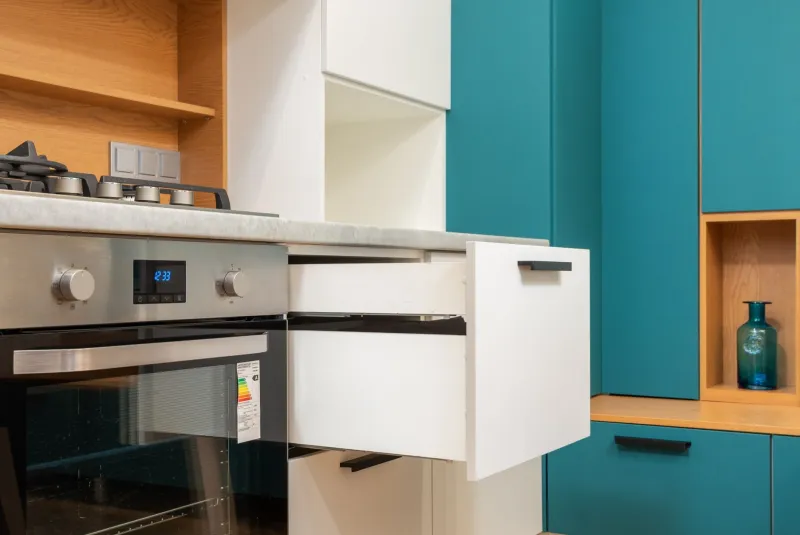
There is a drawer in my kitchen that doesn't shut properly. It never has. For a while I blamed the hinges, then the damp, then the general malice of fitted furniture. Then I actually looked inside and realised the problem: I have been quietly hoarding the entire culinary history of my neighbourhood in a space roughly the size of a shoebox.
Forty-odd takeaway menus. Some laminated, some photocopied so many times the text has gone the colour of weak tea. One is a handwritten note from a man called Tony who does not appear to have a shop. Several have prices corrected in biro. One has a QR code printed on it, which is the modern equivalent of stapling a phone to a leaflet.
This, I've decided, is not clutter. It's an archive. A badly organised, grease-spotted archive of what my high street tastes like — and every Friday night, it's the first thing I reach for.
The Geography of a Kitchen Drawer
A takeaway menu drawer is a map, if you know how to read it. Mine starts with a pizza place that has changed its name three times and its font twice. Then there's the chippy — the proper one, the one that still uses paper and doesn't charge extra for ketchup — and beside it the chippy that opened in what used to be a mobile phone shop and has been "under new management" since roughly the week I moved in.
You can date the drawer. It's accidental stratigraphy. Layers at the bottom: the Indian restaurant that shut a few years back and whose menu I have never quite been able to throw away. Layers in the middle: the kebab van that only operates Friday and Saturday, whose menu is a single side of A5 with a phone number that looks handwritten but isn't. Top layer: three separate leaflets for the same noodle place, each with different prices, which tells you more about the cost of living than any bulletin from the Bank of England.
That's the thing about a high street. You can read about its fortunes in reports, or you can watch it happen one leaflet at a time. The drawer is where closures and grand openings get filed without anyone ever deciding to file them.
What the App Doesn't Know
I use the apps. Let's be honest — in 2026, in the rain, with a child who has announced she is "starving, actually," the app is a marvel. Two taps, a little map with a bicycle on it, and forty minutes later somebody is at the door.
But the app is a terrible anthropologist.
It knows my postcode. It knows what I ordered last time, and the time before that, and it has opinions about it. It offers me "because you liked" suggestions with the quiet confidence of a friend who has misunderstood you. It has ratings — 4.6, 4.7 — which tell you almost nothing about whether the chicken is any good or whether the person on the till will remember that you like extra pickles.
The drawer, by contrast, is gloriously unreliable. Nothing in it is rated. Nothing is recommended. There's no delivery fee displayed, no service charge, no little badge telling you they're busy. There's just a phone number and a promise, and a slightly faded photo of a biryani that has clearly been doing the rounds since about 2014.
And that's the point. The drawer offers indecision, properly earned. You have to weigh it up yourself. You have to ring an actual human being, and they have to say "twenty minutes" or "forty-five," and you have to believe them. There's a small thrill in that which no app has managed to copy.
A Small Archive of Local Taste
I've started to think of the drawer as the neighbourhood's unofficial record office. Every menu in there was chosen, at some point, by somebody in this house, and then kept. That's a strange and quite lovely thing — a pile of paper that only exists because of repeat business.
Look at what it says about us. There's a Thai place we used to order from every fortnight and haven't touched in a year. There's the pizza menu with the corner folded down because the corner has the number for the place that does the good garlic bread. There's a menu for a restaurant that no longer exists, which I keep for no reason except that binning it feels like a tiny act of vandalism against the street I live on.
I'm aware this is a slender defence of a very untidy drawer. But I think we underrate these things. A town's taste isn't recorded in reviews or in star ratings. It's recorded in what people kept in their kitchens and rang up on a Friday when nobody could be bothered to cook.
The Friday Night Verdict
So the drawer stays. It will keep not shutting properly. I will keep rummaging through it, and I will keep finding the same six menus I always find, and I will keep saying "shall we just get the usual," and then we will not get the usual.
The apps are faster. The drawer is better. Not because the food differs — often it's the same kitchen and the same phone number, just a different route to the door — but because the drawer remembers things the app never knew. It remembers the place that closed. It remembers the price before it went up. It remembers Tony, who may or may not exist.
And on a cold Friday in November, with the rain coming in sideways and nobody able to agree on anything, that's worth a good deal more than a 4.7 rating.